


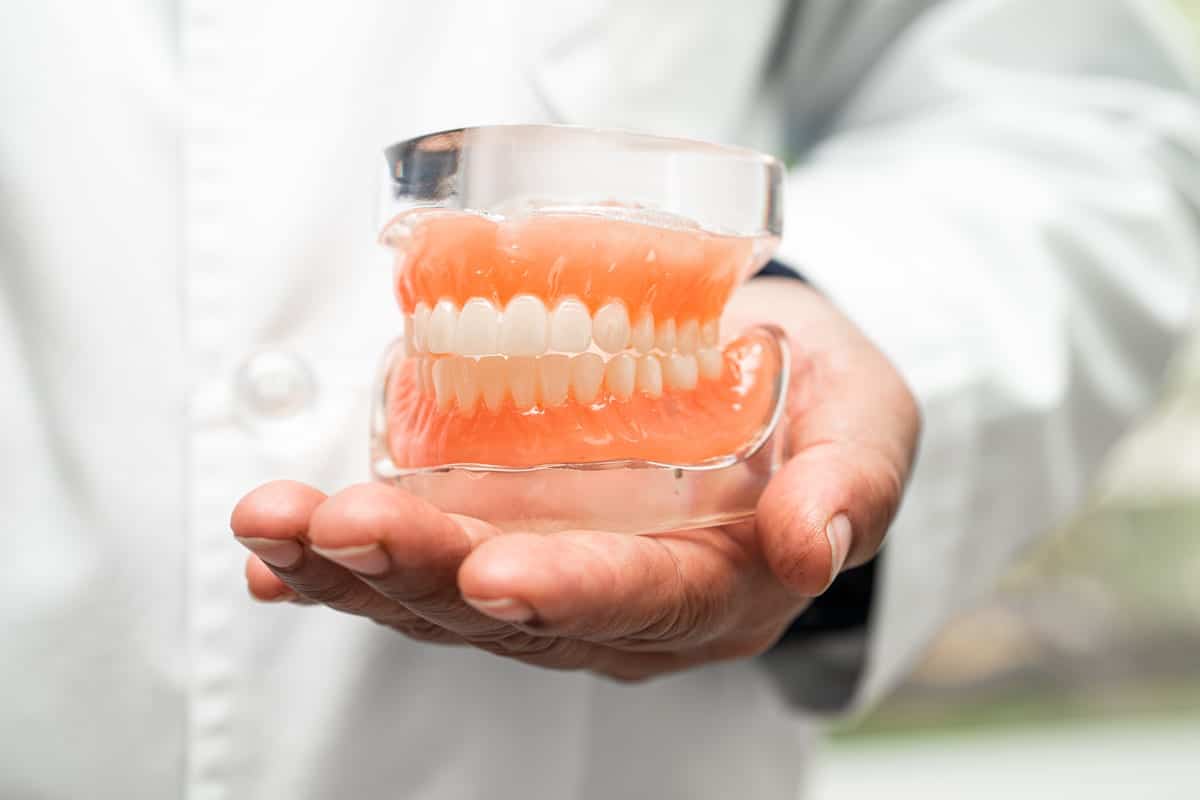
If your dentures once fit perfectly but now feel loose, you are not imagining things. Many Sarasota patients ask Dr. Paola Donaire exactly this question. Understanding why your dentures feel loose after years — and what to do in Sarasota — starts with one key fact: your jaw never stops changing. Over time, bone loss under the gums reshapes the ridge your dentures rest on, and the fit suffers as a result.
Why Dentures Stop Fitting Over Time in Sarasota
When natural teeth are removed, the underlying jawbone no longer receives stimulation. That stimulation — once provided by tooth roots — is what keeps bone healthy and dense. Without it, the bone gradually shrinks in a process called bone resorption.
This is completely natural, but it does create a real problem for denture wearers. As the jaw ridge flattens, the denture base no longer matches its shape. The result is slippage, soreness, and difficulty chewing.
Research shows that denture wearers can lose significant bone volume within the first few years of tooth loss. The changes are slow at first but accumulate steadily over decades. Most patients notice a real difference in fit around three to five years after getting dentures.
Bone resorption also changes facial appearance over time. Sagging around the mouth and a shortened lower face height are common signs. Your dentures may be contributing to these changes if they are no longer properly supported.
Signs That Your Dentures Need Attention
It is not always obvious when dentures need professional attention. Some changes happen gradually, making it easy to adapt without realising the fit has worsened. Knowing the warning signs helps you act before problems worsen.
Watch for these common indicators that your dentures no longer fit correctly:
- Slipping or clicking when you speak or eat
- Sore spots or irritated gum tissue that returns regularly
- Difficulty biting or chewing foods you once managed easily
- Needing more denture adhesive to keep them stable
- Visible gaps between the denture base and your gums
- Changes in your facial appearance or jaw position
Any of these signs warrants a visit to your dentist. Ignoring poor-fitting dentures can lead to gum sores, accelerated bone loss, and nutritional problems from difficulty eating.
What You Can Do: Relining, Rebasing, and Replacement
The good news is that you have options. The right solution depends on how much your jaw has changed and the overall condition of your existing dentures. Dr. Donaire evaluates each patient individually to recommend the most appropriate path forward.
Here is a breakdown of the three main treatment options:
- Relining: A new layer of material is added to the inside of the denture to improve contact with the gum ridge. This is suitable when the denture structure itself is still intact.
- Rebasing: The entire denture base is replaced while keeping the existing teeth. This is a more extensive version of relining for dentures with significant base wear.
- Replacement: When dentures are too old or the jaw has changed too dramatically, a completely new set is the best option. Most dentures need replacing every seven to ten years.
Relining can often be done in a single appointment. Rebasing and replacement take longer but provide longer-lasting results. Your dentist will also take new impressions to ensure the updated fit matches your current jaw structure precisely.
Patients interested in a more permanent solution may also explore implant-supported dentures. These attach to titanium implants in the jaw, providing exceptional stability and helping to slow bone loss.
How Dr. Donaire Helps Sarasota Patients With Loose Dentures
At Optimal Dental Care in Sarasota, FL, Dr. Paola Donaire takes a patient-centered approach to denture care. She understands that loose dentures affect far more than comfort — they affect confidence, nutrition, and quality of life. Every patient deserves a solution that actually works for their lifestyle.
During your appointment, Dr. Donaire will assess your current dentures, your gum tissue health, and the degree of bone change in your jaw. From there, she will walk you through your options in plain language. There is no pressure — just honest guidance based on what is best for you.
Optimal Dental Care also offers services beyond denture care. If you are curious about improving your overall smile, explore Cosmetic Dentistry Sarasota options available at our practice. For patients who want comprehensive care across every stage of life, learn more about our Adult Dentistry Sarasota services.
Choosing a local Sarasota provider means consistent, ongoing care as your needs evolve. Dr. Donaire builds long-term relationships with her patients rather than offering one-size-fits-all solutions.
Tips for Maintaining Your Denture Fit Longer
While bone resorption is inevitable, you can slow its impact and extend the life of your denture fit with good habits. These practical steps make a real difference over time.
- Schedule denture check-ups at least once a year, even if they feel fine
- Clean your dentures daily and soak them overnight to maintain their shape
- Remove your dentures for at least six to eight hours each day to give gum tissue a rest
- Avoid using excessive adhesive as a long-term fix — it masks the problem
- Report any soreness or changes in fit to your dentist promptly
- Eat a balanced diet to support bone and gum health
Consistent professional monitoring is the single most effective habit you can build. Small adjustments caught early prevent the need for major interventions down the road.
Conclusion
Loose dentures are not something you simply have to live with. Bone resorption is a natural process, but modern dentistry offers effective solutions that restore comfort, function, and confidence. Whether relining, rebasing, or replacement is the right choice for you, the important step is taking action sooner rather than later. Dr. Paola Donaire and the team at Optimal Dental Care are here to help Sarasota patients navigate exactly this challenge with expert, compassionate care. Book Now to schedule your appointment with our team.
Frequently Asked Questions
How soon do dentures start to feel loose after getting them?
Most patients begin noticing changes in fit within three to five years of getting dentures. However, bone resorption starts immediately after tooth removal and continues throughout life. The rate varies between individuals based on factors like age, overall health, and diet. Regular check-ups help catch changes early before they become uncomfortable.
Can I fix loose dentures at home with adhesive?
Denture adhesive can provide temporary relief, but it is not a long-term solution. Relying heavily on adhesive usually means the denture no longer fits correctly and needs professional attention. Using too much adhesive can also irritate gum tissue and mask changes that a dentist should evaluate. A professional reline or replacement will provide far better and lasting results.
How often should dentures be replaced?
Most dentures need to be replaced every seven to ten years. However, relining or rebasing may extend their useful life if the denture structure is still sound. Significant changes in your jaw shape, persistent discomfort, or visible wear are signs that replacement may be needed sooner. Your dentist can assess this during a routine check-up.
What is the difference between relining and rebasing a denture?
Relining adds a new layer of material to the inside surface of the existing denture base to improve gum contact. Rebasing replaces the entire denture base while preserving the existing artificial teeth. Relining is a less invasive option suited for mild fit issues. Rebasing is recommended when the base material has significantly deteriorated but the teeth remain in good condition.
Are implant-supported dentures a better option for bone loss?
Implant-supported dentures offer significant advantages over traditional removable dentures when bone loss is a concern. The titanium implants integrate with the jawbone and provide stimulation that slows further resorption. They also offer superior stability and eliminate the need for adhesive. However, they require sufficient existing bone and a surgical procedure, so candidacy must be assessed individually by your dentist.
New Patients Appointment Welcome!